
phageinlyon
With the HCL FOUNDATION, support research on bone and joint infections (BJI) in general, and particularly the PHAGEinLYON Clinic project—Fighting antibiotic resistance: bacteria-eating viruses!

You can directly and actively participate in this research:

  • By making an online donation by clicking HERE
  • By downloading the donation form directly by clicking HERE
Context

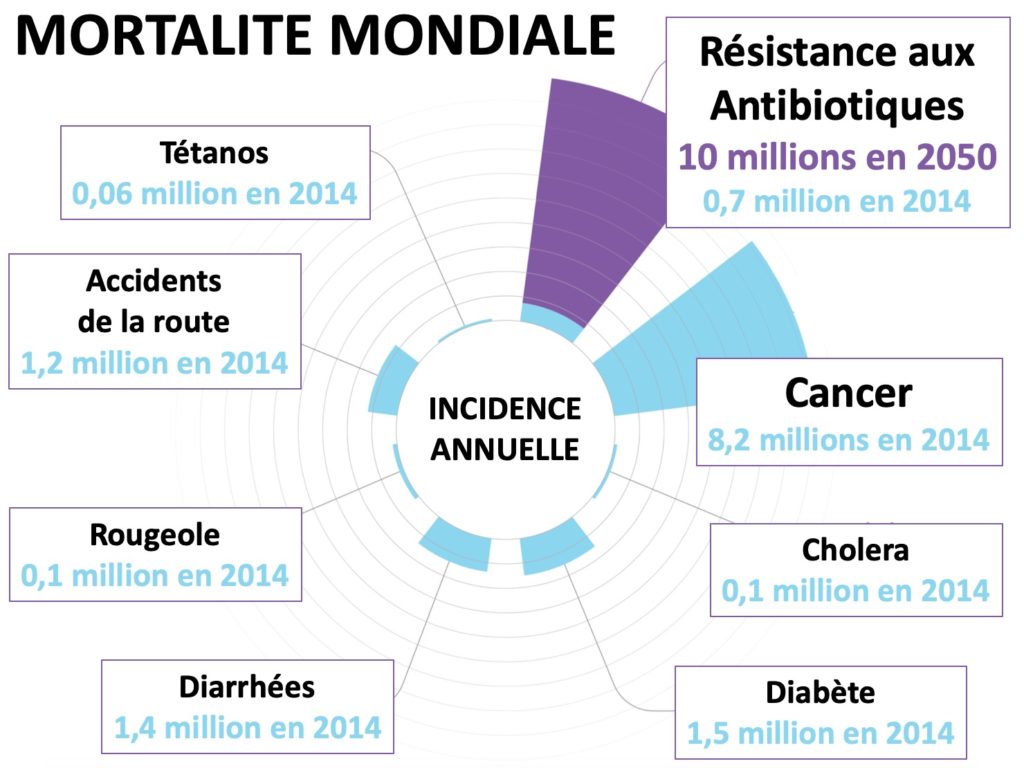
The number of new antibiotics brought to market has been steadily declining since the 1980s, while antibiotic resistance is becoming widespread globally. According to the WHO, in 30 years, there will be more deaths due to antibiotic resistance than to cancer.
Number of new antibiotics approved in the USA and the evolution of antibiotic resistance over time

Causes of mortality in 2014 and projected deaths due to antibiotic resistance in 2050, according to the O’Neill report published in 2014

An increasing number of patients are presenting infections caused by multidrug-resistant bacteria; for some, no antibiotic remains effective.
At the national level, an Antibiotic Resistance Interface has been established by INSERM to coordinate efforts against antibiotic resistance.
At the Hospices Civils de Lyon, the CRIOAc Lyon team has observed that implant-related infections (knee and hip prostheses), even in the absence of antibiotic resistance, are particularly difficult to control and can become chronic, with severe impacts on quality of life: partial or total disability, loss of autonomy, or even death from sepsis.

This issue is found in infections of all kinds, and the Lyon team has set itself the goal of addressing what is becoming a major public health challenge. They propose an alternative to antibiotics: phage therapy, as part of the PHAGEinLYON Clinic project.

This therapy uses natural bacterial predators—bacteriophages or phages—to destroy bacteria and eradicate bacterial infections.

Phages: Viruses That Are Friends to Humans

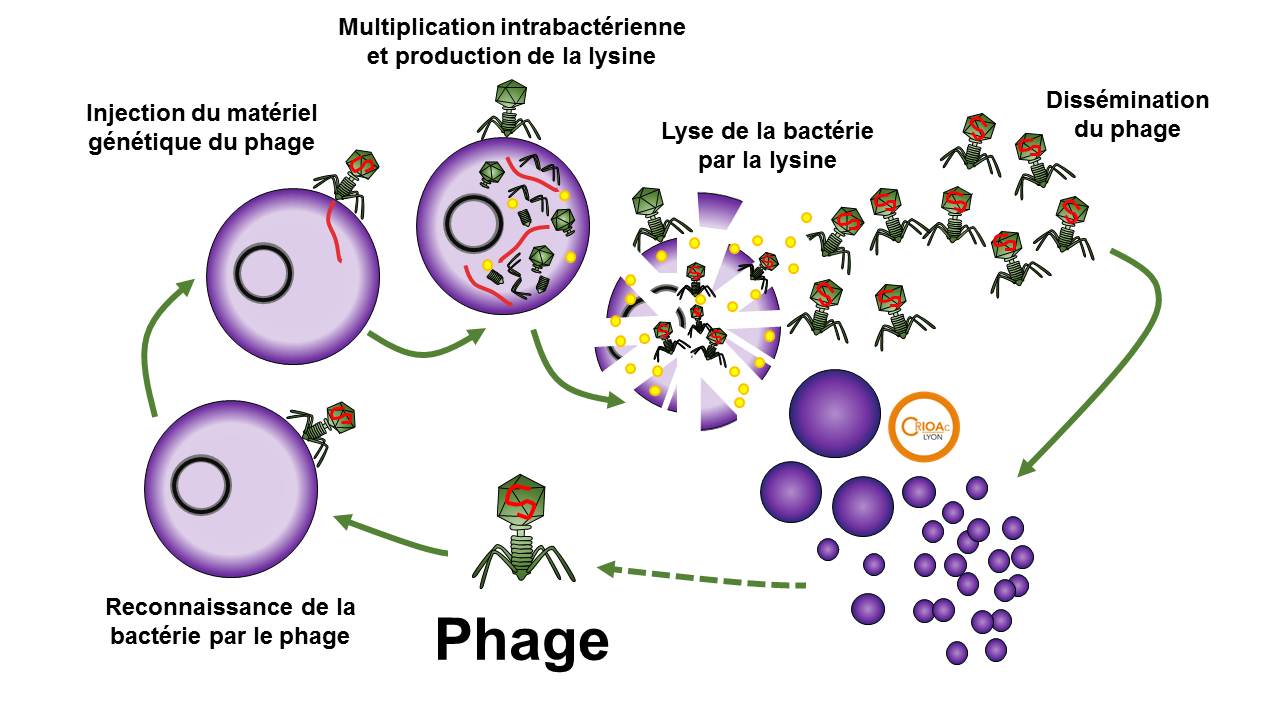
Phages are viruses found in large quantities in nature (billions per liter of water) and exclusively target bacteria. Each phage species attacks only one bacterial species, making it a highly targeted weapon, unlike antibiotics, which also attack beneficial bacteria (e.g., digestive flora). To do this, the phage attaches itself to the surface of its bacterial prey, injects its DNA into the bacterium, and then hijacks the bacterial machinery to produce hundreds of virus copies. These copies, upon release, literally cause the bacterium to burst, thereby destroying it permanently.
Moving Beyond Exceptional Use!

Our team has treated around fifteen patients with phage therapy on an exceptional basis, under the supervision of the French National Agency for Medicines and Health Products Safety (ANSM). These patients had prosthetic infections or severe multidrug-resistant bacterial infections, with conventional treatments failing and their vital or functional prognosis at risk. These patients were in a therapeutic deadlock. They were treated “on compassionate grounds, and thus in a highly exceptional manner.” Because we have obtained very encouraging results, we must move beyond exceptional use!

The CRIOAc Lyon aims to demonstrate the relevance and, above all, the effectiveness of phage therapy, so that this treatment becomes an integral part of the therapeutic solutions available to patients in the context of bone and joint infections (BJI), but potentially for any type of resistant infection or those threatening functional or vital prognosis.

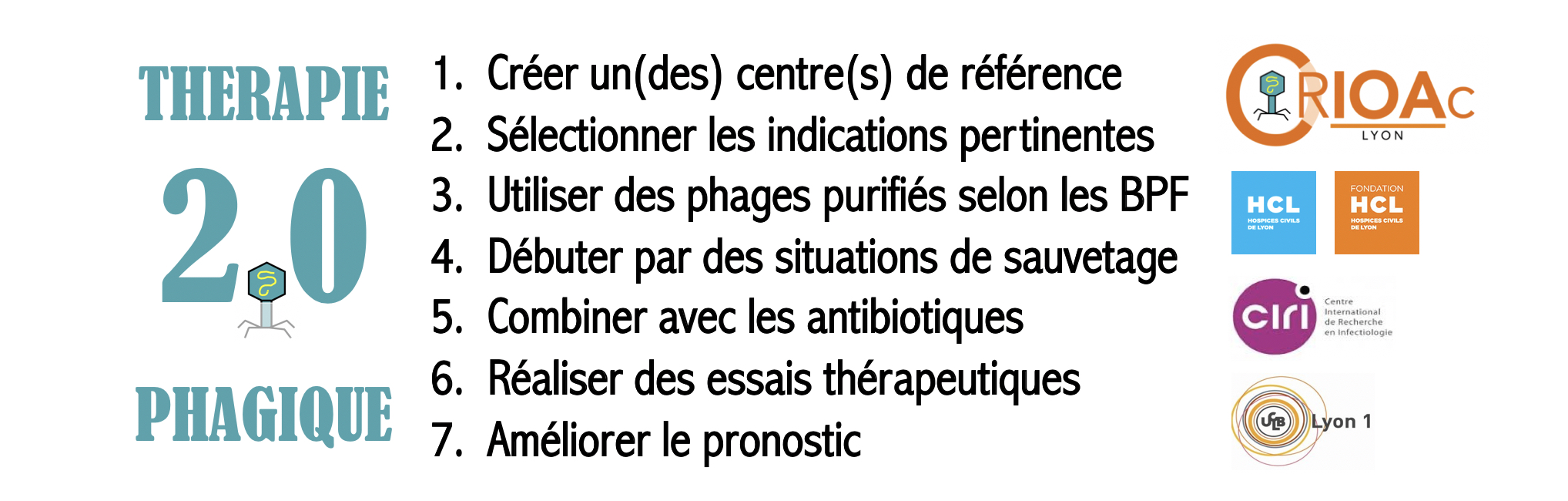
Project Objective: Phage Therapy 2.0

1 – Harness the natural ability of bacteriophages to destroy bacteria and provide an innovative solution for treating patients in therapeutic failure.
2 – Develop a support platform to validate indications during a Multidisciplinary Consultation Meeting (RCP) dedicated to phage therapy, and to monitor patients receiving compassionate phage treatment, ensuring safety, follow-up, and evaluating the impact on quality of life.
3 – Propose the production of therapeutic phages complementary to those offered by industry, targeting the bacteria most frequently involved in antibiotic-resistant infections, as part of the PHAG-ONE project.
4 – Conduct clinical trials to optimize the use and efficacy of phages in order to control, or even eradicate, these infections, and ultimately improve patients’ quality of life and survival.
5 – Contribute to the creation of French Phage Establishments—modeled after the French Blood Establishments—capable of supplying all French hospitals with bacteriophages to treat patients in therapeutic deadlock.
6 – Collaborate with other centers in Europe to generate a true network of Phage Therapy centers, under the aegis of the European Society of Clinical Microbiology and Infectious Diseases (ESCMID) and its group dedicated to non-traditional therapies, including phages (ESGNTA).

Action Plan

To achieve the objectives of the PHAGEinLYON Clinic project, the following actions will be undertaken in the coming years:
• Isolate phages active against the most common bacterial species and establish an academic “phage bank” at the Infectious Agents Institute of the HCL, containing at least one hundred phages.
• Develop innovative tools to determine the characteristics of these phages and test their activity on clinical bacterial strains identified in infected patients: phage typing, electron microscopy, phage genome sequencing.
• Produce the first batches of therapeutic phages under optimal conditions at FRIPHARM, the “haute couture” pharmacy of the HCL, following a secured process meeting health authority requirements (GMP – Good Manufacturing Practice): purification and preparation in forms usable as human medicines to treat patients in therapeutic failure (Project PHAG-ONE).
• Include patients in cohort studies to monitor them, enable biobanking, and demonstrate that phages are safe to use, effective, and have a positive impact on quality of life.
• Implement clinical trials within the CRIOAc network to validate the role and impact of phage therapy in the therapeutic arsenal for infected patients, initially for joint prosthesis infections, before considering an extension to all complex infections.

Patient Impact

  • Change the outcome for each patient affected by antibiotic-resistant infections, improve their quality of life, and increase their chances of survival
  • Provide a response to the bacterial resistance crisis, which is on track to become THE major public health issue of the next 30 years

Economic Impact

  • Encourage academic production of therapeutic phages, complementary to that offered by industry, at a controlled cost unmatched in Europe
  • Avoid additional costs associated with the chronicity of infections uncontrolled by antibiotics, prevent relapses, and iterative hospitalizations

Support CRIOAc Lyon Research

You can directly and actively participate in the research work of CRIOAc Lyon by making an online donation to support, in particular, the PHAGEinLYON Clinic project via the HCL Foundation by clicking HERE. You can also download a donation form by clicking HERE.
Our team is a member of the Bactériophage France network Phages.frLOGO_Phages_fr.png